
Lighting Guides
Beyond House Wires: Different Types of Electrical Cables and their Applications
Have you wondered about the Types of Electrical Cables and their Applications? When most people hear the word wire, they think of what runs behind the walls of a home.
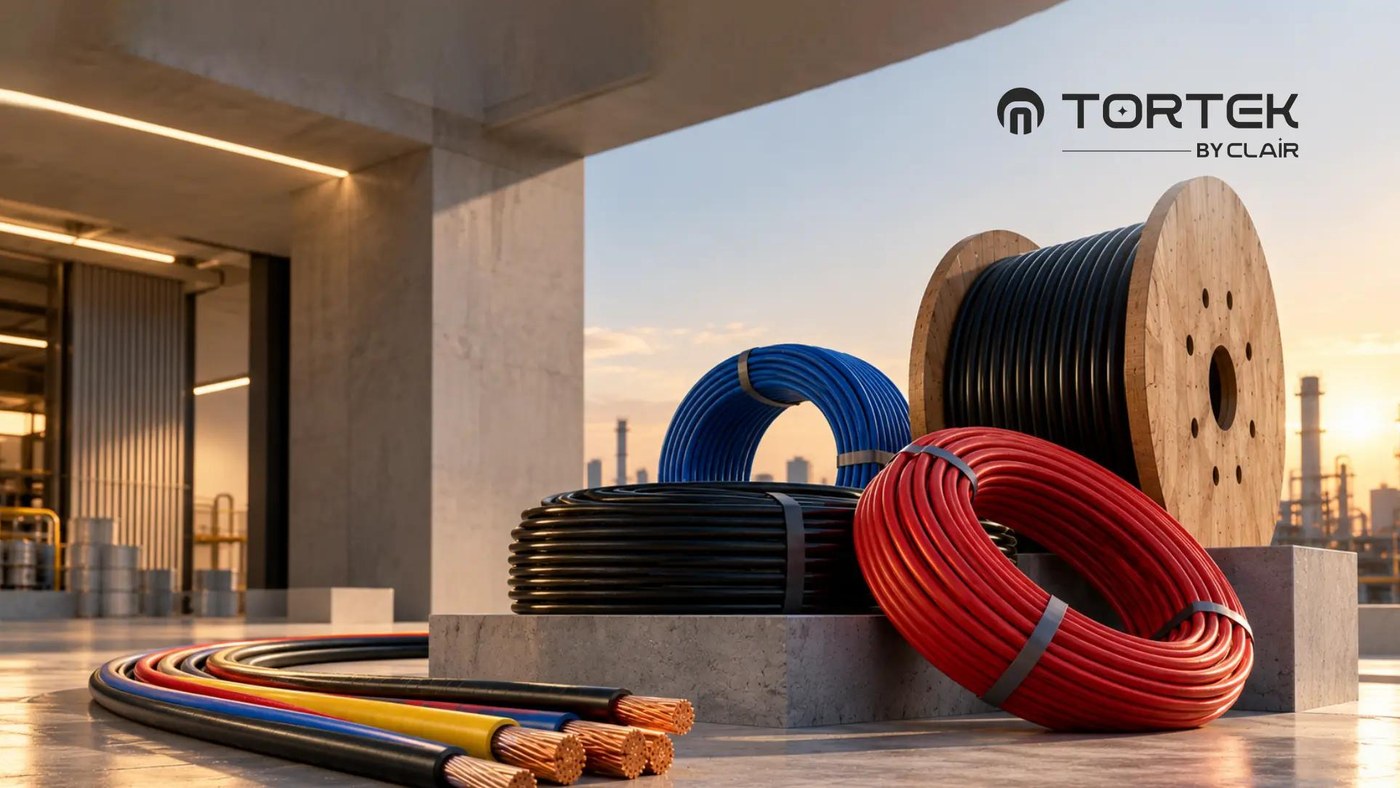
Have you wondered about the Types of Electrical Cables and their Applications? When most people hear the word wire, they think of what runs behind the walls of a home. A switch. A socket. A fan. An appliance. But that is only one part of the world of wires and cables.
The cable running through a house and the cable operating inside a factory may look similar from the outside, but they can be designed for very different jobs.
One may simply carry electrical power. Another may control machinery. Another may carry measurement signals from industrial equipment.
Another may need to keep working outdoors under continuous sunlight, underground, inside a mine or in demanding industrial conditions.
So the better way to understand cables is not simply by asking:
“What wire is this?”
It is by asking:
What does it need to carry, and where does it need to work?
That is the larger world Tortek by Clair operates in.
Tortek serves households, industries and infrastructure projects, with its cables used across sectors including power, steel, cement, mining, chemicals, telecommunications, real estate and infrastructure.
A Cable Is Defined By The Job It Has To Do
Electrical connectivity takes different forms depending on the application.
Power Cables
Power cables do the most familiar job: carrying electrical energy from one point to another.
They are required across homes, buildings, commercial facilities, factories, industrial plants and large infrastructure projects.
But the amount of power, installation environment and operating conditions can differ significantly from one application to another.
That is why one cable specification cannot simply be used everywhere.
Explore Tortek by Clair for electrical solutions built around different applications.
Control Cables
Modern machines do not only need power.
They also need instructions.
Control cables carry signals used to operate equipment, switches, motors, machinery and automated systems.
In an industrial environment, a machine may receive power through one cable while another cable tells it when to start, stop or perform a specific function.
That difference is important.
One connection supplies the energy.
The other helps control what the equipment does with it.
Instrumentation Cables
Industries increasingly depend on measurement.
Temperature. Pressure. Flow. Level. Process conditions.
Instrumentation cables help carry these measurement signals between sensors, instruments and monitoring or control systems.
The amount of electricity involved may be small, but the information being carried can be extremely important to how a plant operates.
This is why cable selection is not always about carrying more power.
Sometimes it is about carrying the right signal accurately and reliably.
Communication Cables
As electrical systems become more connected, communication between equipment is becoming equally important.
Different applications may require cables to move information between systems, devices and equipment.
This means the electrical ecosystem is no longer just about transmitting energy.
It is increasingly about transmitting power, commands, measurements and information.
That is why it makes more sense to think of Tortek not simply as a wire brand, but as a brand working across different forms of electrical connectivity.
The Environment Changes The Cable Requirement
What a cable carries is only half the question.
The other half is:
Where will it operate?
A cable inside a home lives a very different life from one installed on an exposed solar project or inside a mine.
Depending on the application, cables may need to:
withstand heat
resist the spread of flame
produce lower smoke
handle UV exposure
operate underground
work in mining environments
function around water
maintain performance under demanding fire conditions
This is where materials, insulation, construction, testing and cable standards become critical.
Tortek’s manufacturing facility in Bhiwadi-Alwar, Rajasthan includes advanced machinery and an in-house laboratory. Its products are tested against BIS, IEC, BS and customer-specific requirements, with certifications including IS 694, IS 1554 and IS 7098.
One Category, Very Different Sectors
The easiest way to understand the scale of the cable category is to look at where cables are actually used.
Homes and Real Estate
Homes need dependable wiring for everyday electrical loads.
Here, safety, insulation quality and consistent performance are essential because much of the wiring disappears behind walls once construction is complete.
Industrial Plants
Factories need much more than basic electrical distribution.
A single plant may require cables for power, machinery control, process measurement and communication between different systems.
This is why industrial wiring quickly becomes a network rather than a single category.
Power and Infrastructure
Large infrastructure projects require cables that can operate reliably across wider electrical systems and demanding conditions.
The focus shifts towards long-term performance, engineering consistency and suitability for the application.
Solar Projects
Solar installations introduce another environment altogether.
Cables may be exposed to sunlight, changing temperatures and outdoor conditions for long periods.
So the requirements change again.
Mining
Mining environments can place cables under demanding operating conditions.
Mechanical stress, difficult installation environments and continuous operation mean the cable needs to be selected specifically for the job rather than treated as a standard electrical component.
Tortek’s cable portfolio serves industries ranging from power and steel to cement, mining, chemicals, telecommunications and infrastructure, reflecting just how varied cable applications can be.
Why One Cable Cannot Do Every Job
A cable is not simply copper surrounded by insulation.
Its design depends on three basic questions:
What does it need to carry? Power, control signals, measurements or communication.
Where will it be installed? Inside a building, outdoors, underground, in a factory or in a specialised environment.
What conditions will it face? Heat, flame, smoke, UV exposure, moisture, mechanical stress or other operating demands.
Change any one of these, and the cable requirement may change too.
That is why choosing a cable only by size or price misses the larger engineering question.
The right cable is the one designed for the application.
Tortek By Clair: Beyond The Domestic Wire
Tortek has over two decades of experience in wires and cables and manufactures for households, industries and infrastructure projects. The company also exports to markets including Qatar, UAE, Oman, Egypt, Tanzania and others.
That makes the larger Tortek story much broader than domestic wiring.
A wire may power a room.
A cable may control a machine.
Another may carry the signal that monitors an industrial process.
Another may connect a solar installation exposed to the elements every day.
The form changes because the job changes.
Tortek by Clair is not simply about selling wire.
It is about building the right connection for what needs to work.
FAQs
1. What are the main types of electrical cables?
Electrical cables can be designed for different functions, including carrying power, control signals, instrumentation signals and communication.
2. Why are different cables needed for different industries?
Every industry has different electrical loads, operating environments and safety requirements. A cable suited to a building may not be appropriate for a mine, industrial plant or outdoor solar installation.
3. What is the difference between a power cable and a control cable?
A power cable primarily carries electrical energy. A control cable carries signals used to control equipment or machinery.
4. Why does cable insulation matter?
Insulation helps protect the conductor and is selected according to the electrical, environmental and safety demands of the application.
5. Where are Tortek cables used?
According to Tortek’s company brochure, its cables serve households, industries and infrastructure, including sectors such as power, steel, cement, mining, chemicals, telecommunications and real estate.